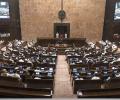
Once more women assume leadership roles and join the nation-building process, he said, adding they will become a guarantee of the country's bright future.
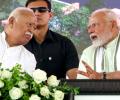
BJP and RSS leaders are once again pushing to remove the words 'secular' and 'socialist' from the Constitution's Preamble, showing a deeper effort to change India's identity from a diverse, multi-religious republic to a Hindu-first nation, even though they don't have the numbers in Parliament to officially change the Constitution, observes N Sathiya Moorthy.

In a dramatic turn of events, Prime Minister Mark Carney's Liberal Party secured victory in Canada's federal election, overcoming earlier predictions of defeat.
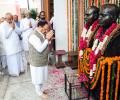
'As we read and assess what is going on around us in the India of 2025, it is instructive to do this through the lens of 75 years ago and the events that led to the formation of the BJP as we know it,' recalls Aakar Patel.

The house of the BJP Minority Morcha's Manipur president, Asker Ali, was set on fire by a mob allegedly for supporting the Waqf Amendment Act. The incident happened at Lilong in Thoubal district on Sunday night. Ali had expressed his support for the Act on social media on Saturday. An irate mob gathered outside his residence around 9 pm, vandalised it and later set it on fire. Following the incident, Ali posted a video on social media, apologising for his earlier statement. He also expressed opposition to the Act.

The Supreme Court on Friday said it would hear after four weeks a plea seeking a direction to the Centre and others to take steps to create an appropriate system which empowers citizens to petition Parliament and seek initiation of deliberations on issues highlighted by them.

Ahead of the Parliament session, the government will hold a meeting with leaders of all parties on Sunday to brief them and hear their views, amid an intense buzz on whether it will have some surprise item up its sleeve during the five-day sitting.

A leader of reserve and quiet dignity, former prime minister Manmohan Singh had a keen taste for Urdu verses, and his poetic banters with Bharatiya Janata Party leader Sushma Swaraj in the Lok Sabha are among the most viewed parliamentary debates on social media.

She also proposed that nine issues, including violence in Manipur and price rise, be listed for discussion during the session.

Banerjee said she will protect the minority people and their property.

The Delhi Police's Crime Branch will investigate the case against Congress leader Rahul Gandhi in connection with a scuffle on the Parliament premises that left two BJP MPs injured. An FIR was registered against Gandhi after a BJP complaint accused him of physical assault and incitement. Police will also investigate a separate complaint filed by the Congress, accusing BJP MPs of misbehaving with party chief Mallikarjun Kharge. Lok Sabha Speaker Om Birla has banned demonstrations by MPs and political parties at any of the Parliament gates following the incident.

What would Parliament be without these nine ladies?

A three-judge Supreme Court bench will hear petitions challenging the constitutional validity of the Waqf (Amendment) Act, 2025, on April 16. The petitions, including those by politicians and the All India Muslim Personal Law Board (AIMPLB) and Jamiat Ulama-i-Hind, were filed in the top court challenging the validity of the newly-enacted law. The Centre has filed a caveat in the apex court, seeking a hearing before any order is passed.

Several petitions were filed in the apex court challenging the Act, contending that it was discriminatory towards the Muslim community and violated their fundamental rights.

Initiating the debate on the bill from the opposition's side, Congress leader Sonia Gandhi said that any delay in bringing the reservation into effect would be "gross injustice" to Indian women.

The prime minister also expressed confidence that the session would witness best thoughts, best discussion and best innovative ideas.

As the Bharatiya Janata Party disrupted the Parliament on the coal block issue, Prime Minister Manmohan Singh on Monday attacked the party and dared it to have a debate in the House to let the country judge the truth.

At this poignant historic moment one can only wish that institutions are not built by bricks and mortars, but also by the rich Parliamentary traditions which have stood the test of time which needs to be strengthened by all stakeholders, notes Rup Narayan Das, a former joint secretary of the Lok Sabha Secretariat.

Protesters in West Bengal's Murshidabad district set fire to police vehicles and hurled stones during a demonstration against the Waqf (Amendment) Act. The incident occurred on Tuesday afternoon in the Jangipur area, where a large crowd had gathered demanding the withdrawal of the legislation. Police responded with lathi charges and tear gas to control the situation. Several people were detained and police personnel were injured in the stone-pelting. The West Bengal Police has said the situation is under control and strict action will be taken against those who resorted to violence.

The Lok Sabha was adjourned for the day on Tuesday due to noisy protests by the opposition, who demanded answers regarding Prime Minister Narendra Modi's statement on the Mahakumbh. Opposition members protested after PM Modi's statement and demanded the inclusion of stampede deaths in the statement. The House proceedings were initially adjourned until 1 pm, and when the House resumed, opposition members continued their protests, forcing the Chair to adjourn the proceedings for the day.

Both the government and the Opposition have accused each other of "running away" from a debate on the issue.

The speaker said she was ready to start the debate right away if the House agreed. The debate has been listed in Monday's list of business under Rule 193.

The Union Budget will be debated from today.
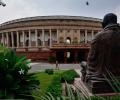
Prime Minister Narendra Modi is likely to reply to the debate in the Lok Sabha on Monday and in the Rajya Sabha on Tuesday.

JD-U MP Sanjay Kumar Jha heads a diplomatic mission to Indonesia, Malaysia, South Korea, Japan and Singapore, to seek international cooperation after the Pahalgam attack while highlighting Pakistan's role in cross-border terrorism.

The unusual timing of the session has left everyone wondering, even though the main standout feature on the listed agenda is a special discussion on Parliament's journey of 75 years starting from the "Samvidhan Sabha" (Constituent Assembly).

'The PM says he believes in discussion and debate, then why are discussions and debates not being allowed in Parliament?'
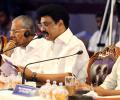
'There will be no change of seats for Delhi, Assam and Maharashtra.' 'Andhra, J&K, Kerala, Punjab, Karnataka, Tamil Nadu, Odisha, West Bengal and Telangana will lose seats while there will be an increase for MP, UP, Bihar, Haryana, Gujarat and Chhattisgarh.' 'It is a big mistake if you make it a north-south issue.'
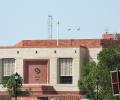
Nineteen opposition political parties, including the Congress have announced a boycott of the ceremony on May 28, demanding that President Droupadi Murmu and not Prime Minister Narendra Modi do the inauguration.

Former Union Law Minister Ashwani Kumar has argued for replacing the existing collegium system for judicial appointments, asserting that public sentiment leans toward an alternative mechanism, potentially resembling the National Judicial Appointments Commission (NJAC). He believes that the government has the authority to propose a revised constitutional amendment for judicial appointments that would withstand judicial scrutiny. Kumar also urged the Supreme Court to establish a robust internal process to address concerns within the judiciary, including allegations against judges.

A combative External Affairs Minister Sushma Swaraj on Tuesday said she was ready for a debate in Parliament over Congress allegations about her links with controversial former Indian Premier League chief Lalit Modi.
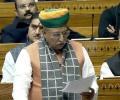
Two bills that lay down the mechanism to hold simultaneous elections were introduced in the Lok Sabha after a fiery debate on Tuesday, with the opposition terming the move 'dictatorial' and Law Minister Arjun Ram Meghwal asserting that the legislation would not tamper with the powers enjoyed by states.

The situation in Muslim-dominated Murshidabad district of West Bengal, which was marred by incidents of violence following protests over the Waqf (Amendment) Act, was calm and peaceful on Wednesday with no reports of any untoward incident. Prohibitory orders were clamped in and around Raghunathganj and Suti police station areas and large police force deployed in all sensitive areas of the district, especially in and around Jangipur town, where a large number of people had assembled on Tuesday afternoon, demanding the withdrawal of the legislation. Internet connectivity remained suspended within the areas under the Jangipur sub-division to prevent the spread of any disinformation. Protestors, who had gathered in large numbers on the NH-12 in the Jangipur area to protest against the Waqf Bill, hurled stones at the police who were deployed in the area, on Tuesday afternoon. A couple of vehicles belonging to the police were allegedly torched during the protest and police had to resort to lathi-charge and use tear gas shells to bring the situation under control. A few policemen were injured in the stone pelting. Police have also detained a few people in connection with the incident. West Bengal Governor C V Ananda Bose condemned the incident and said attempts to disturb the law and order situation in the state "should be put down with an iron hand". The opposition BJP alleged that the law and order situation in the state was "crumbling" under Chief Minister Mamata Banerjee, who was busy with "minority appeasement". The Waqf (Amendment) Bill was passed by the Lok Sabha on Thursday, and by the Rajya Sabha in the early hours of Friday after marathon debates in both Houses of Parliament. The Act aims to streamline the management of Waqf properties (assets permanently donated by Muslims for religious or charitable purposes) with provisions to safeguard heritage sites and promote social welfare. It also seeks to improve governance by enhancing transparency in property management, streamlining coordination between Waqf boards and local authorities and protecting stakeholders' rights.

The MPs representing various political parties offered heartfelt tributes to the building that has been the epicentre of India's democratic journey.
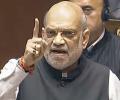
The Congress on Tuesday accused Home Minister Amit Shah of harboring "hatred" towards B.R. Ambedkar, demanding an apology from him for his remarks in the Rajya Sabha. Congress leaders pointed out that Shah's comments, which criticized the frequent invocation of Ambedkar's name by the opposition, demonstrate a deep-seated animosity towards the architect of India's Constitution. The allegations sparked outrage among Congress members, who accused the BJP and RSS of having a history of disdain for Ambedkar. The incident has fueled political tensions, with the Congress vowing to hold Shah accountable for his remarks.

Congress deputy leader in Rajya Sabha Pramod Tiwari said the first priority should be to hold a comprehensive and detailed discussion on the Manipur situation in Parliament, going by the fact that people have been killed and the chief minister himself has admitted that several such incidents have happened in the state.

odi said the country has rejected negativity and asserted that the winter session was a golden opportunity for the opposition.

Prime Minister Narendra Modi was not present at the all-party meeting convened by the government.

Trinamool Congress MP Mahua Moitra's reference to the death of judge B H Loya 'long before his time' created uproar in Lok Sabha on Friday as Union minister Kiren Rijiju accused her of raising a matter settled by the Supreme Court, and warned of 'appropriate parliamentary action'.
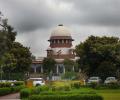
The Supreme Court of India will likely hear a batch of petitions challenging the constitutional validity of the Waqf (Amendment) Act, 2025 on April 15. The Act, which came into force on April 8, has been met with widespread criticism from various stakeholders, including politicians, the All India Muslim Personal Law Board (AIMPLB), and Jamiat Ulama-i-Hind. They argue that the law is discriminatory and violates the fundamental rights guaranteed under Articles 25 and 26 of the Constitution. The petitions allege that the amendments give the government more control over the administration of Waqf, effectively sidelining the Muslim minority from managing their own religious endowments.
